

.svg)
Corporate due diligence obligations
As a responsible business, we follow the German Supply Chain Due Diligence Act (LkSG). Whilst we fall outside the scope of the LkSG due to our company size, we’re committed to proactively meeting its requirements.
To support this and keep our approach aligned with the LkSG in the long term, we implemented the fully automated osapiens software solution for risk analysis and assessment in 2024. Standardised templates from the law firm Graf von Westphalen support legally compliant risk assessment and the efficient management of corrective and preventive measures.

Thanks to the trusting cooperation with osapiens, we can help to ensure that human rights risks in our supply chain are uncovered step by step and minimised in close cooperation with our suppliers.
René Heinrich, Sustainability Product Manager at Unite

Supply chain reporting system
We see ourselves as a trustworthy and responsible partner. If you become aware of any human rights breaches, environmental risks, or violations within Unite or our supply chain, you can report them anonymously through our whistleblowing system.

Taking responsibility together
Unite has a local supplier structure. As a European group, our national subsidiaries provide buyers with suppliers from their respective countries. This 100% European supplier base significantly reduces the risk of human rights violations in our Tier 1.
Principles such as fairness and transparency are firmly anchored in Unite guidelines. This also applies to our
Code of Conduct for Business Partners, which addresses the requirements of the Supply Chain Act and must be confirmed by all suppliers on the Unite platform.
At Unite, we cultivate sustainable business relationships from which all participants on our platform can benefit. And in doing so, we share responsibility.
As a company operating across 12 European markets, Unite closely monitors related supply chain legislation – including laws in the UK, Switzerland, France, and the Netherlands – as well as ongoing developments at EU level.
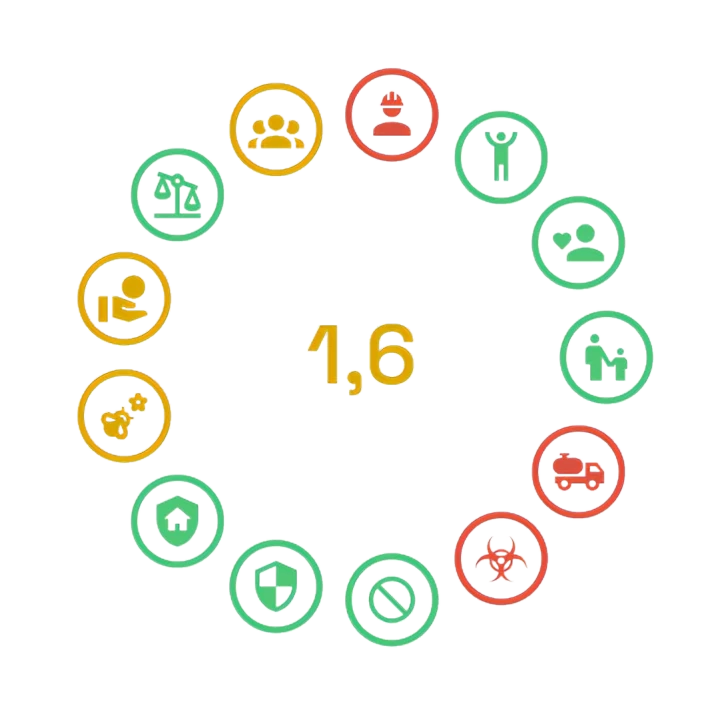
Our Supply Chain Act risk check
We review LkSG-relevant categories for all suppliers during onboarding, and once a year. If the results show increased risk scores, we follow up and refine our measures.
We review the following areas:
- Forced labour
- Slavery
- Violation of the freedom of association
- Unlawful eviction
- Occupational health and safety breaches
- Prohibition of persistent organic pollutants
- Soil, water and air pollution
- Unfair pay
- Child labour
- Use of security companies where there’s a risk of breaches
- Discrimination in the workplace
- Prohibition of mercury use
- Ban on the export of hazardous waste
Example on the right: The supplier achieves an overall score of 1.6. The individual risk exposure across the 13 LkSG Act categories is also shown.