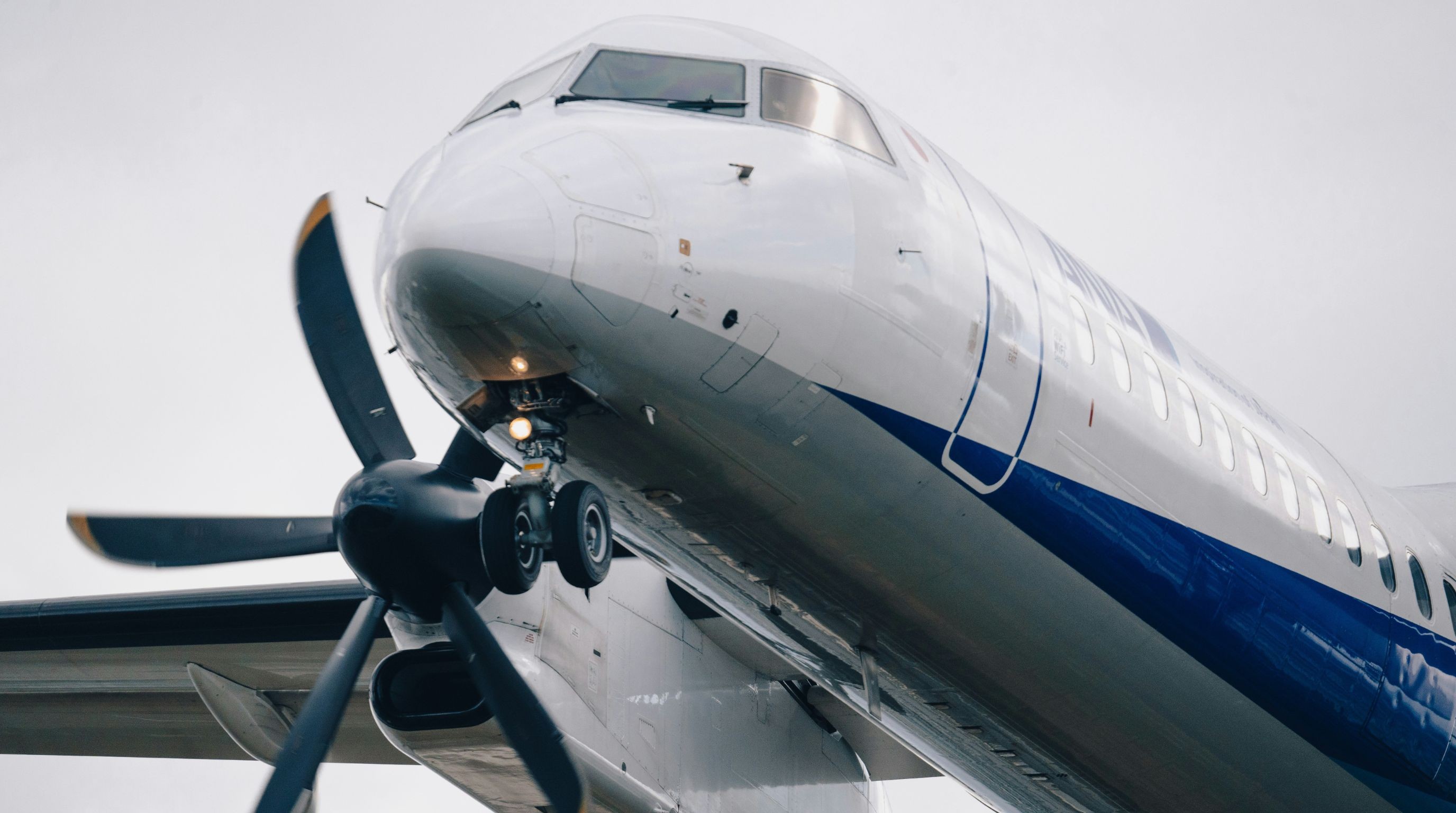
Aerospace and defence is being asked to build more than at almost any point in living memory. The 'Global Market Forecast 2025–2044' (Airbus, 2025) anticipates global demand for 43,420 new passenger and freighter aircraft over the next two decades, with the in-service fleet nearly doubling to 49,210 by 2044; Boeing's parallel outlook points to 43,600 deliveries. For the procurement leaders who keep production lines and fleets moving, this is not an abstract headline - it is a structural test of whether the supplier base can deliver.
The demand surge collides with a supply chain that analysts describe as fragile and capacity-constrained. Indirect procurement - the chemicals, tooling, MRO consumables, IT and services behind every airframe - has moved from the back office to the centre of execution. This article examines the pressures defining 2026 and the strategies leaders are using to respond: supply chain fragility, MRO and parts availability, AI adoption, near-shoring, and the strategic elevation of the function itself.
The demand signal is structural, not cyclical
Commercial backlogs now stretch beyond a decade. 'Aerospace and Defense at an Inflection Point' (PwC, 2025) describes a backlog of more than 14,000 commercial aircraft and a defence backlog of $747 billion, up 25% in two years. On the defence side, NATO allies committed at the June 2025 Hague summit to spend 5% of GDP by 2035, and NATO's own figures confirm European allies and Canada raised defence spending 20% in 2025 alone.
This matters because demand of this scale converts every weak supplier link into a delivery risk. The challenge is structural, not cyclical. Leaders who treat the surge as a temporary spike will under-invest in the supplier capacity and visibility the next decade demands.
Supply chain fragility is now a delivery-credibility problem
The '2026 Aerospace and Defense Industry Outlook' (Deloitte Insights, 2025) is blunt: the industry faces a paradox in which supply chains must simultaneously become more efficient and more resilient, and pressure will persist through at least 2027. Shortages of materials, skilled labour and specialist castings continue to govern output. The 'Aerospace Supply Chain Resilience Report 2025' (Roland Berger, July 2025) underlines the human dimension: at 65%, personnel shortages were the most commonly cited challenge, while around half of suppliers reported a need for additional financial resources to fund the ramp-up.
McKinsey sharpens the point. 'Overcoming challenges in aerospace procurement' (McKinsey & Company, 2023) found aerospace supply chains entered the recent crisis period less financially stable than automotive or advanced-electronics peers, with the sector's financial health declining a further 9% between 2020 and 2023. A decade of consolidation has concentrated the tier-two and tier-three base, so when disruption hits, its effects are magnified across more of the production line.
The lesson for indirect procurement is that supplier fragility is no longer only a cost question - it is a delivery-credibility question. A late delivery of a seemingly minor indirect item can stall an entire build.

Procurement intelligence for aerospace & defence
Discover expert perspectives, industry trends and practical guidance to navigate complexity. Access exclusive insights, eBooks and practical resources - free to explore.
MRO and parts availability are the binding constraint
With production backlogs forcing operators to fly older fleets longer, the aftermarket has become one of the industry's most resilient revenue streams - and one of its tightest bottlenecks. Aviation Week Network's commercial aftermarket forecast projects global MRO demand will grow at a 3.2% CAGR between 2026 and 2035, with the engine segment's share of total MRO demand rising toward 53%.
For procurement, parts availability has overtaken price as the dominant concern. McKinsey's analysis of more than 1,000 earnings calls found aerospace executives were roughly 18 times more likely to mention supply-chain terms such as "shortages" in 2022 than in 2014 - a shift in focus from cost efficiency to risk management and supply assurance. Securing availability - through redundancy, supplier development and condition-based forecasting - is now the core procurement mandate.
AI is moving from pilot to procurement workflow
Artificial intelligence is the most discussed lever in the sector, but the evidence urges discipline. 'Three Truths About AI in Aerospace and Defense' (BCG, 2025) found that roughly two-thirds of A&D AI efforts remain in the proof-of-concept phase, with only about one in three improving the business in measurable ways. BCG also found that custom-built AI solutions deliver materially higher ROI than off-the-shelf alternatives, and that competitive advantage sits at the top of the technology stack, not in infrastructure.
Deloitte expects agentic AI to progress from pilots to scaled deployments through 2026, with the most visible advances in procurement, planning, logistics, maintenance and administrative functions. For procurement leaders, the actionable takeaway is to focus on a handful of high-value use cases - spend visibility, should-cost modelling, supplier-risk monitoring - rather than broad, unfocused investment.
Near-shoring and sovereignty are reshaping the supplier map
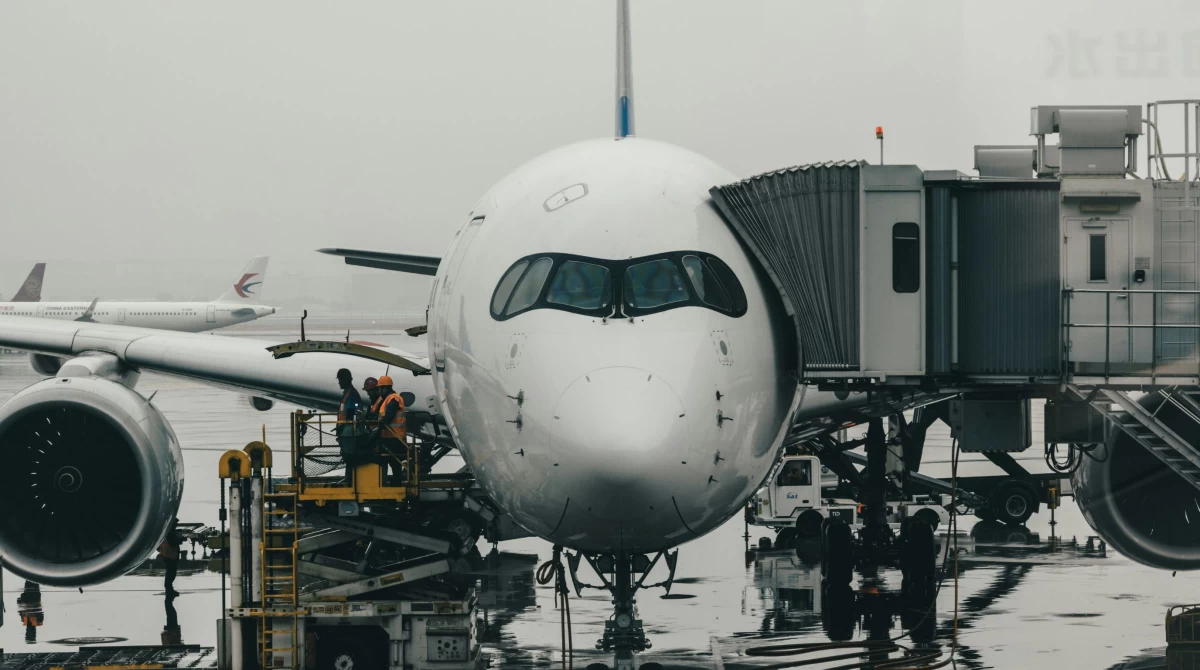
Tariffs, export controls and geopolitical risk have made industrial-base sovereignty a board-level priority. PwC's Future of Industrials research, surveying more than 500 C-suite executives, found that nearly half of A&D executives expect to reshore or near-shore most production by 2030, with a meaningful share investing in redundant system failover as a self-healing supply chain capability.
Pull quote: Global efficiency can no longer come at the expense of strategic vulnerability. The new priority is industrial-base sovereignty - building redundancy without sacrificing performance.
This is not a wholesale retreat from global sourcing. It is a deliberate rebalancing toward regional ecosystems, dual-sourcing of critical categories and trusted-ally partnerships.
How leading A&D procurement teams are responding
Leading procurement teams are treating the demand surge as a capability-building moment rather than a firefight. Several practices stand out.
First, leading organisations are investing in supplier development and redundancy in critical categories, accepting that working capital tied up in resilience is cheaper than a stalled production line. McKinsey notes that adapting sourcing to production forecasts, rather than order volumes alone, materially reduces unpredictability.
Second, they are targeting indirect categories for near-term savings. Because many indirect costs have returned to or below pre-pandemic levels, competitive bidding in transportation, facilities and IT can fund resilience investment elsewhere - McKinsey cites cost reductions of up to 20% without quality impact.
Third, procurement teams are digitising the source-to-contract process. Organisations that build a single source of spend truth and automate manual steps free capacity for strategic work; McKinsey estimates up to 40% of procure-to-pay activity can be automated through established tools.
Finally, leading teams are building AI literacy across the function, recognising that adoption - not the tool - determines value.
Conclusion
The 2026 demand surge rewards organisations that treat indirect procurement as a strategic capability. Three points define the agenda: supply chain fragility is now a delivery-credibility risk, parts and MRO availability have overtaken price as the binding constraint, and AI delivers value only when focused on a few high-impact use cases. Near-shoring and sovereignty will continue reshaping the supplier map through 2030. The leaders who invest now in redundancy, visibility and capability will convert a decade of demand into durable advantage.
Frequently asked questions
The three most pressing challenges are supply chain fragility and material shortages, parts and MRO availability constraints as fleets fly longer, and geopolitical and tariff risk driving near-shoring. Deloitte's 2026 outlook expects these pressures to persist through at least 2027, and Roland Berger's 2025 research identifies personnel shortages, cited by 65% of players, as the single most common constraint.
AI is being applied to spend visibility, should-cost modelling, supplier-risk monitoring and predictive maintenance. BCG found custom-built solutions deliver higher ROI than off-the-shelf tools, yet roughly two-thirds of A&D AI efforts remain stuck in the proof-of-concept phase—so disciplined focus matters more than breadth.
Tariffs, export controls and geopolitical risk have elevated industrial-base sovereignty. PwC found nearly half of A&D executives expect to reshore or near-shore most production by 2030 to reduce strategic vulnerability, typically through regional ecosystems and dual-sourcing rather than a full retreat from global supply.
What’s the solution?
Unite operates across 12 European markets and works with leading public and private sector organisations across the aerospace and defence sector. To understand how Unite supports indirect procurement compliance and spend intelligence in aerospace and defence, speak to our team.