The SME Spend Gap: Why Public Bodies Struggle to Direct One Pound in Three

UK government targets £1 in £3 with SMEs. The gap is a measurement problem. How public bodies direct and evidence SME spend under the Procurement Act 2023.

UK government wants one pound in every three of public spend to reach SMEs. Most public bodies cannot yet prove they are getting there.

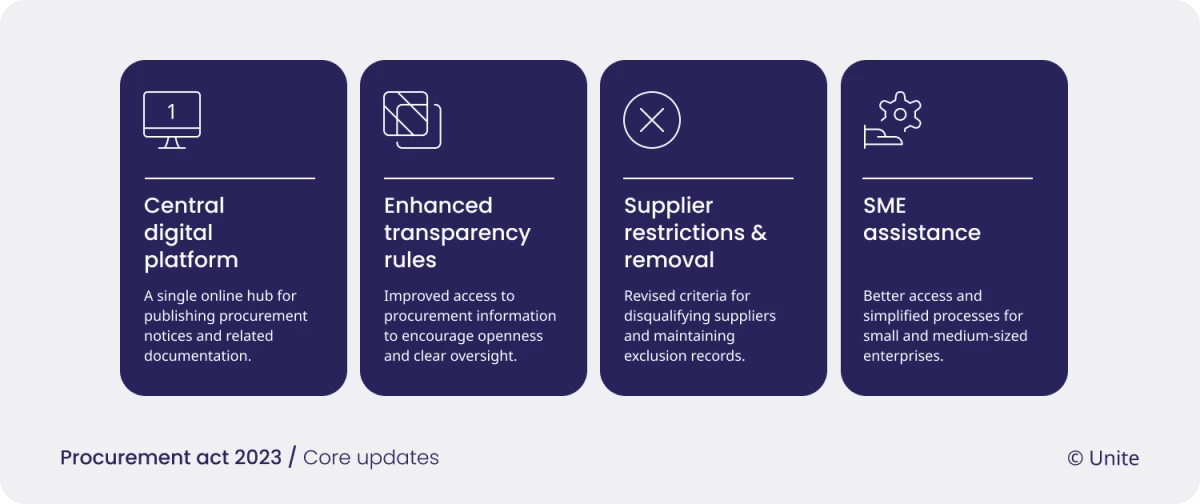
The ambition is explicit and long-standing, and the Procurement Act 2023 gave it statutory weight through a duty to consider SMEs and the National Procurement Policy Statement's focus on direct SME delivery.

Yet the gap between target and reality persists, not because the will is missing, but because the measurement is. Departments cannot direct spend toward SMEs, or prove that they have, without knowing who they are actually buying from.

This article examines why the SME gap is a measurement problem, where it hides in the supplier base, and how leading public bodies turn an aspiration into an evidenced number.

https://unite.eu/img/containers/assets/uploads/bard/blog-article-1500x600px-procurement-act.webp/c650f2f884bb7a6baa2715af847e6bed/blog-article-1500x600px-procurement-act.webp procurement act 2023 core updates

The gap is real, and it is a policy exposure

One pound in every three, 33%, is the stated ambition. The direction of travel under the Act is toward more SME participation, more transparency, and more scrutiny of whether public spend actually reaches small suppliers.

This matters because SME participation is now scored and defensible, not aspirational. A department that cannot evidence it is exposed on a criterion it is measured against.

The pressure is not going away. It is being written into tenders, contract terms and reporting obligations.

The problem is measurement, not motivation

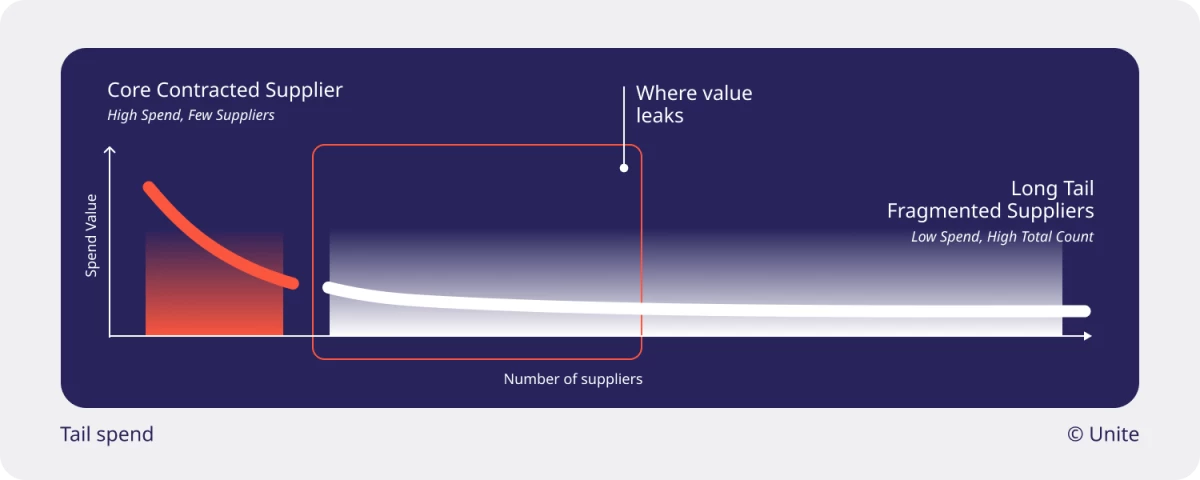
Most public bodies want to buy from SMEs. What they lack is visibility of who their suppliers actually are, especially in the tail, where the largest number of suppliers sits.

Without transaction-level supplier data, SME participation is a figure reconstructed once a year from incomplete records, not a number that can be managed month to month.

You cannot direct what you cannot see. And you cannot evidence what you never measured.

unite_public_procurement_intelligence_hub

Navigate the future of public procurement

Access the latest thinking, strategic insights and exclusive downloadable resources to help you navigate the challenges and opportunities shaping public sector procurement.

Tail spend is where SME participation is won or lost

The tail, up to 80% of transactional effort, is spread across the largest and most diverse supplier base. It is precisely where SME suppliers cluster, and precisely where visibility is weakest.

Bring the tail into a governed channel and the supplier base becomes visible, categorised and directable. SME participation stops being a guess and becomes a lever.

The honest concession: some specialist categories simply have few SME suppliers, and no channel invents them. But across the tail as a whole, the participation that is achievable is far higher than most bodies currently evidence.

https://unite.eu/img/containers/assets/uploads/bard/tail-spend.webp/bfaec198bf6c7948913c660c458dea09/tail-spend.webp tail spend graphic

Direct SME delivery is what the policy actually rewards

The National Procurement Policy Statement cares most about direct SME delivery, spend that reaches a small supplier as the supplier, not buried three tiers down in a subcontract.

That distinction matters for evidence. Direct relationships are visible and countable; subcontracted SME spend is neither.

A governed channel with a high proportion of SME suppliers turns direct delivery into the default, and into a number that stands up to audit.

How leading public bodies close the gap

First, leading organisations make supplier type visible at transaction level, so SME participation is measured, not estimated.

Second, they bring tail spend into a governed route where the supplier base is categorised and directable. Third, they prioritise direct SME delivery, the spend the policy rewards, over subcontracted participation that cannot be evidenced.

Fourth, they treat the resulting number as a managed metric, reported and improved over time, rather than a figure assembled once a year for a return.

Conclusion

The SME spend gap in public procurement is a measurement problem wearing the mask of a policy one. The target is clear; the visibility to hit and evidence it is what most public bodies lack.

The bodies closing the gap have made supplier participation a transaction-level number, concentrated in the tail where SMEs cluster and visibility is weakest. The first move, again, is visibility: you cannot direct, or prove, spend you cannot see.
Frequently asked questions

Government aims for one pound in every three, 33%, of public spend to reach SMEs. The Procurement Act 2023 gave the ambition statutory weight through an SME duty, and the National Procurement Policy Statement prioritises direct SME delivery over subcontracted participation.

Primarily because of measurement, not motivation. Without transaction-level visibility of who they are buying from, especially in the tail where most suppliers sit, departments cannot direct spend toward SMEs or evidence the participation they achieve.

Direct SME spend reaches a small supplier as the named supplier and is visible and countable. Subcontracted SME spend is buried within a larger contract and is neither directable nor easily evidenced. The National Procurement Policy Statement rewards direct delivery.

Sources: Procurement Act 2023; National Procurement Policy Statement. Cabinet Office guidance on SME participation and social value. Finance Day / House of Commons Library, tail-spend statistics. Every figure in this article is drawn from these sources.